

Skip to content
NamingStudio.ai
Start a project

Who this is for

Everyone who has to name something and then defend it.

The problem looks the same whether it is a company, a product line or whatever came out of a merger. Candidates are easy to find. Being able to defend the one you picked is the part that takes work.

A blank brass Art-Deco nameplate on a leather desk blotter beside a fountain pen, lit by a banker lamp. (AI generated)

Founders

Naming the company you are about to spend a decade on.

You want a name that fits your category, respects the language and culture of the markets you are entering, and sounds like something your customers would say out loud. The reasoning is handed over with it, so the name holds up the first time an investor asks where it came from.

Replaces a naming process that otherwise costs weeks of agency time and a budget most pre-seed teams do not have.


Five gilt-banded crystal vessels in a row on black marble, four matched and a differently shaped fifth at the end of the line. (AI generated)

Marketers

Launching into a portfolio that already has a shape.

A new product brand has two jobs at once. It has to stand on its own and sit correctly beside everything you already sell. The studio reads your category and your existing range first, so what you take forward extends the portfolio instead of arguing with it.

Turns a stalled naming workshop into a shortlist you can put in front of your brand lead this week.

A closed leather portfolio case and a stack of prepared folders on a boardroom table, the chairs around it still empty. (AI generated)

Agencies and studios

The groundwork, done before the kick-off.

Walk into the kick-off with the category mapped, the conventions named and several hundred name candidates already screened. Your creative directors spend their hours on judgement and argument, which is what the client is paying them for, instead of on the first fortnight of desk research.

Compresses the unbillable half of a naming pitch.

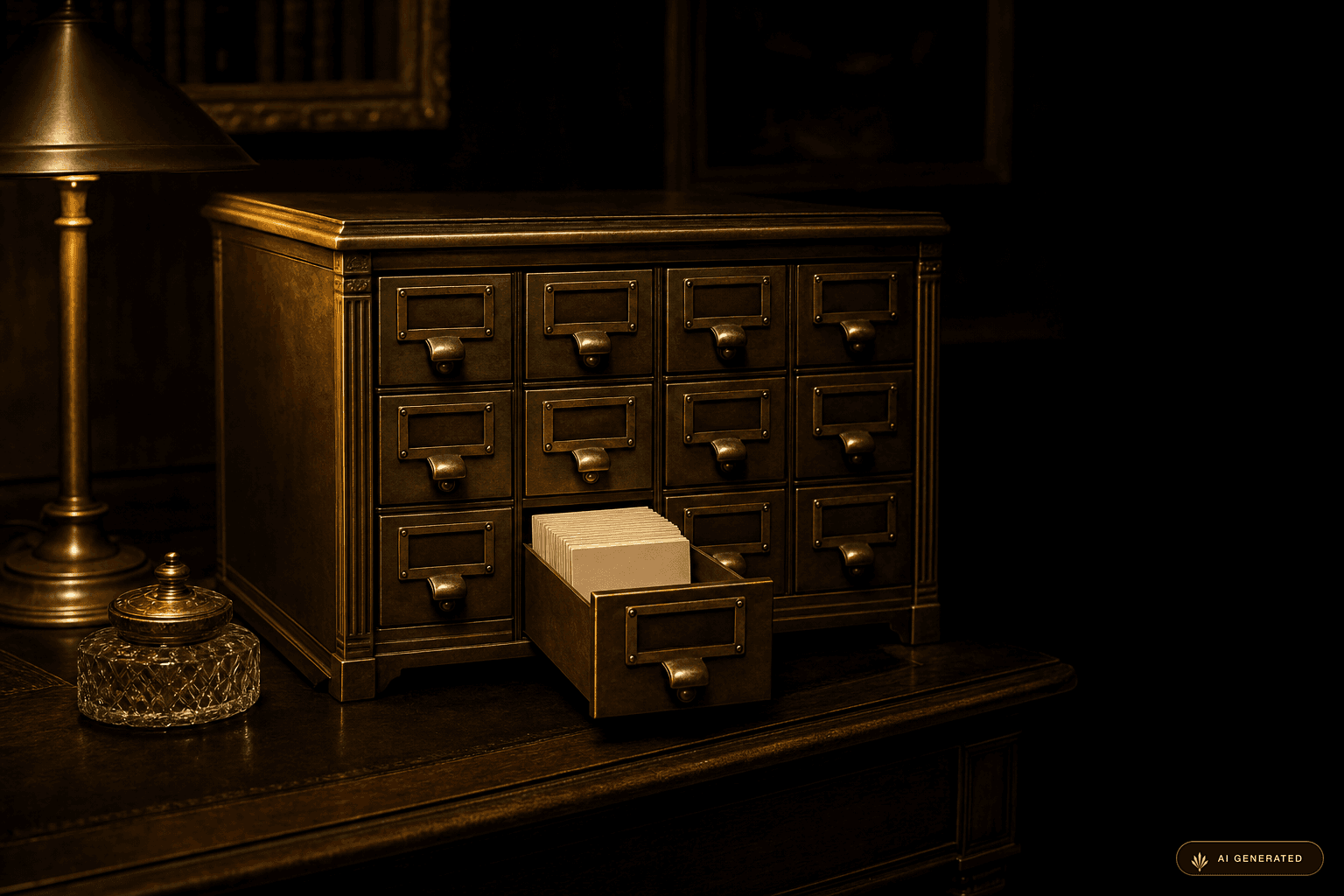
A brass card-index cabinet on a desk with one drawer pulled open, blank index cards standing upright inside. (AI generated)

Product teams

Features, tiers and modules need names too.

Internal naming is where brands quietly get messy. A feature is called one thing in the interface and something else in the docs, and by the time sales invents a third version nobody wants to reopen it. Run the same process you would for a company name, scaled to something smaller.

Settles the naming argument in sprint planning without a designer having to win it.

A hand lifting an Art-Deco brass door plate away from walnut panelling, the unfaded rectangle and screw holes still visible behind it. (AI generated)

Rebrands and mergers

When the old name stops fitting.

A merger, a pivot, a market you have outgrown, or a name that turned out to mean something unfortunate three countries over. Renaming carries more risk than naming because there is something to lose, which makes the reasoning behind it matter more rather than less.

Gives you a case for the change that survives the people who chose the old name.

A green velvet tray of a dozen identical gold fan-mark wax seals, with one seal lifted out and resting apart from the rest. (AI generated)

Investors and accelerators

Portfolio companies that all need the same thing.

Every cohort has founders stuck on a name, and every one of them asks you about it. Give them a process instead of an opinion, and one that produces something they can defend in the next room without your partners quietly becoming the naming committee.

Scales one piece of advice across a whole portfolio.

Linguistic and cultural screening is not a legal clearance and does not replace a trademark attorney.

The name is the one decision you cannot quietly revise.

Run the whole process before you commit, and keep the reasoning for the day somebody asks you why.

Pay per run. Cards, wallets and invoice options for companies, all through Stripe.